Rap is Coming Home to the Land of the Gstanzl: Full Article translated
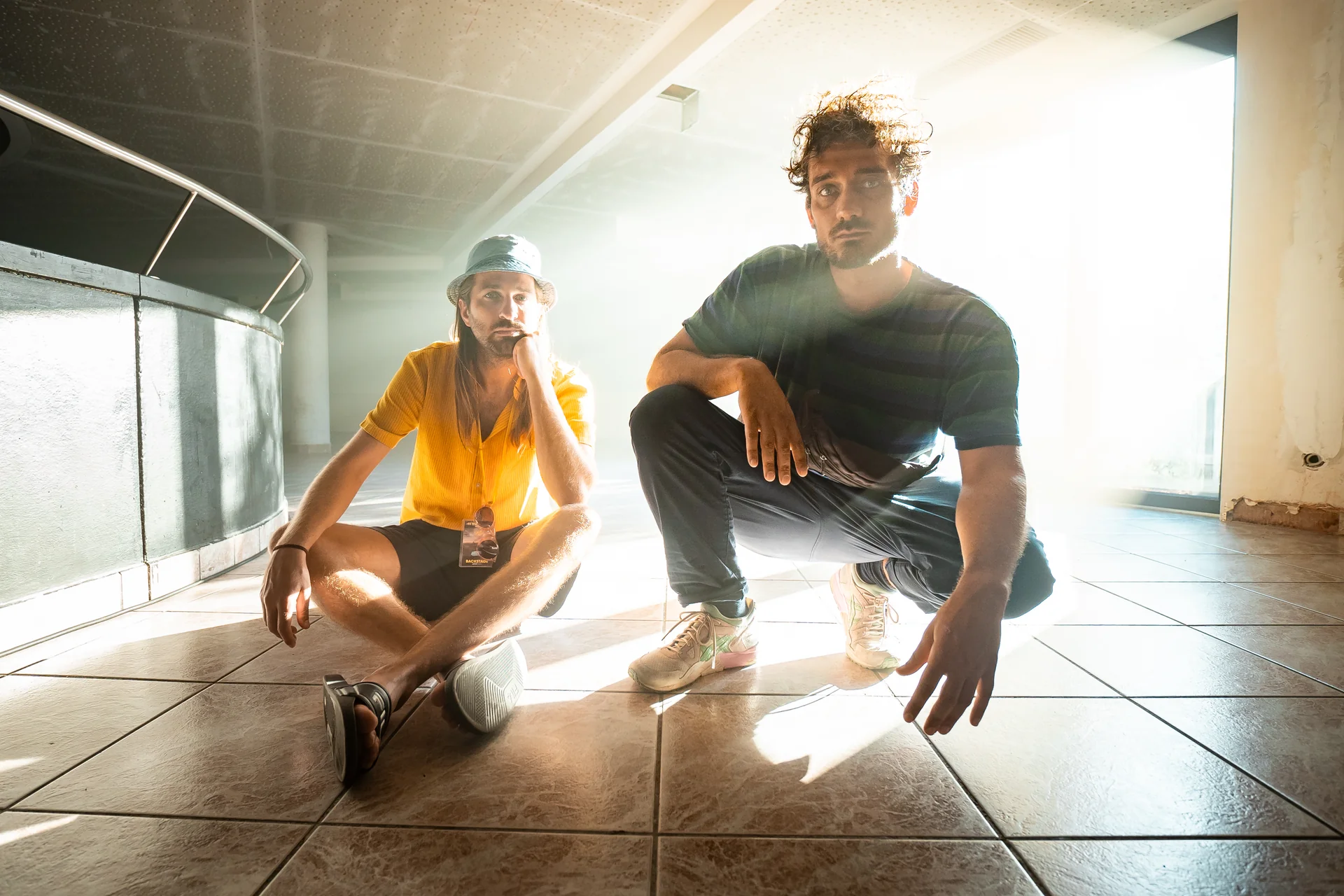
Rap is Coming Home to the Land of the Gstanzl
Like the traditional Gstanzl before it, Bavarian rap music embodies the desire to critique world politics and society in a sly and witty way.
Text: Lorenz Beyer
Photos: Stickford, Janik Schöbel, Christoph Gabler, Leon Zarbock, Bern Kirner
Roider Jackl dared to be bold. Through him, the Gstanzl became truly popular as a political satire and protest song. Hardly was the horror of World War II over when he made fun of Hitler. Yet the denazification of Germany was still in full swing. In 1950, he sang about Hitler’s former vacation residence near Berchtesgaden:
An Obersalzberg hams aufg’forst mit ganz große Bam damit si da frühere Besitzer nimmer auskennt, wenn er wirkli no kam.
[They reforested Obersalzberg with really big trees, so the former owner, if he ever came back, will not find his way with ease]
The Gstanzl tradition remains alive in Bavaria to this day—as mocking competition or as political protest. But other forms of expression have also emerged alongside it, pursuing similar goals. Today there is a small dialect rap scene in Bavaria whose leading figures are part of the german musical mainstream. Bavarian dialect rap has existed almost as long as rap itself. So let’s start at the beginning.
Rap Music Doesn’t Stay American—Now It’s Getting Bavarian!
In 1979, the Sugarhill Gang achieved a worldwide hit with Rapper’s Delight. The hip-hop subculture became known to the world public just a few years after its emergence in New York’s Bronx. The vocals were fundamentally new, because instead of singing, people spoke rhythmically to the beat.
This break with existing listening habits quickly attracted imitators. For many rock and pop musicians of the 1980s, it was simply funny to parody the current trend. In 1981, the Munich dialect pop band Relax delivered what was probably the first rap in Bavarian dialect with their debut single Radio hör’n. In the lyrics, the singer complains about his girlfriend’s overly modern taste in music. A few years later, Hans-Jürgen Buchner, alias Haindling, came up with the idea of merging a traditional folk music text with rap music:
Da Oasiedl vo Bogn hod Hoidzscheidl globn / und hod si an Schiefing in’n Osch einezogn […]
[The hermit from Bogen was chopping timber / when into his ass he got a splinter]
This is how it sounds in rough Lower Bavarian dialect on Hoidzscheidl-Rap from the 1984 album Stilles Potpourri.
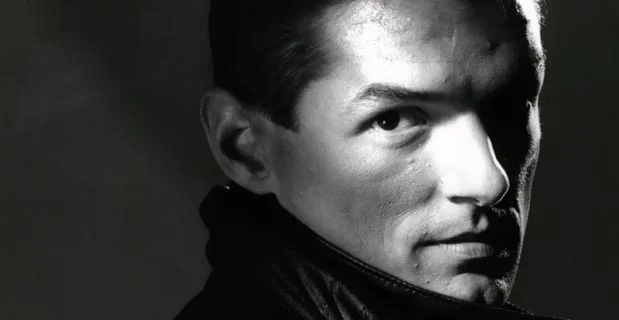
Besides the many parodies, there was also an artist in the 1980s who achieved worldwide success with rap in a dialect belonging to the Bavarian language family. With Der Kommissar, Falco developed his own rap style in 1982 in Viennese-tinged High German, far from parody. How close he came to the American scene is shown by an interview for the Austrian TV program Okay from 1984: In it, Falco spoke with DJ and hip-hop pioneer Afrika Bambaataa about possible collaboration on his second album. However, with his serious approach to rap music, Falco remained unique for a long time.
The Dialect Rap Scene Establishes Itself in Bavaria
It wasn’t until the 2000s that a dialect rap scene began to establish itself around Bavarian dialects. What was new: It was no longer dialect rock artists making excursions into rap, but regional hip-hop scenes venturing into their native dialects. How strange this felt at first is shown by the track Sprachbarrieren by the Linz crew Texta from 2001. In it, they defend themselves against the lack of understanding they encountered from the German scene because of their Austrian accent. In Sprachbarrieren, they explain dialect terms under the motto:
Wir vier brechen Sprachbarrieren vom Hamburger Hafen bis zum Wiener Praterstern.
[We four break language barriers from Hamburg Harbor to Vienna’s Praterstern.]
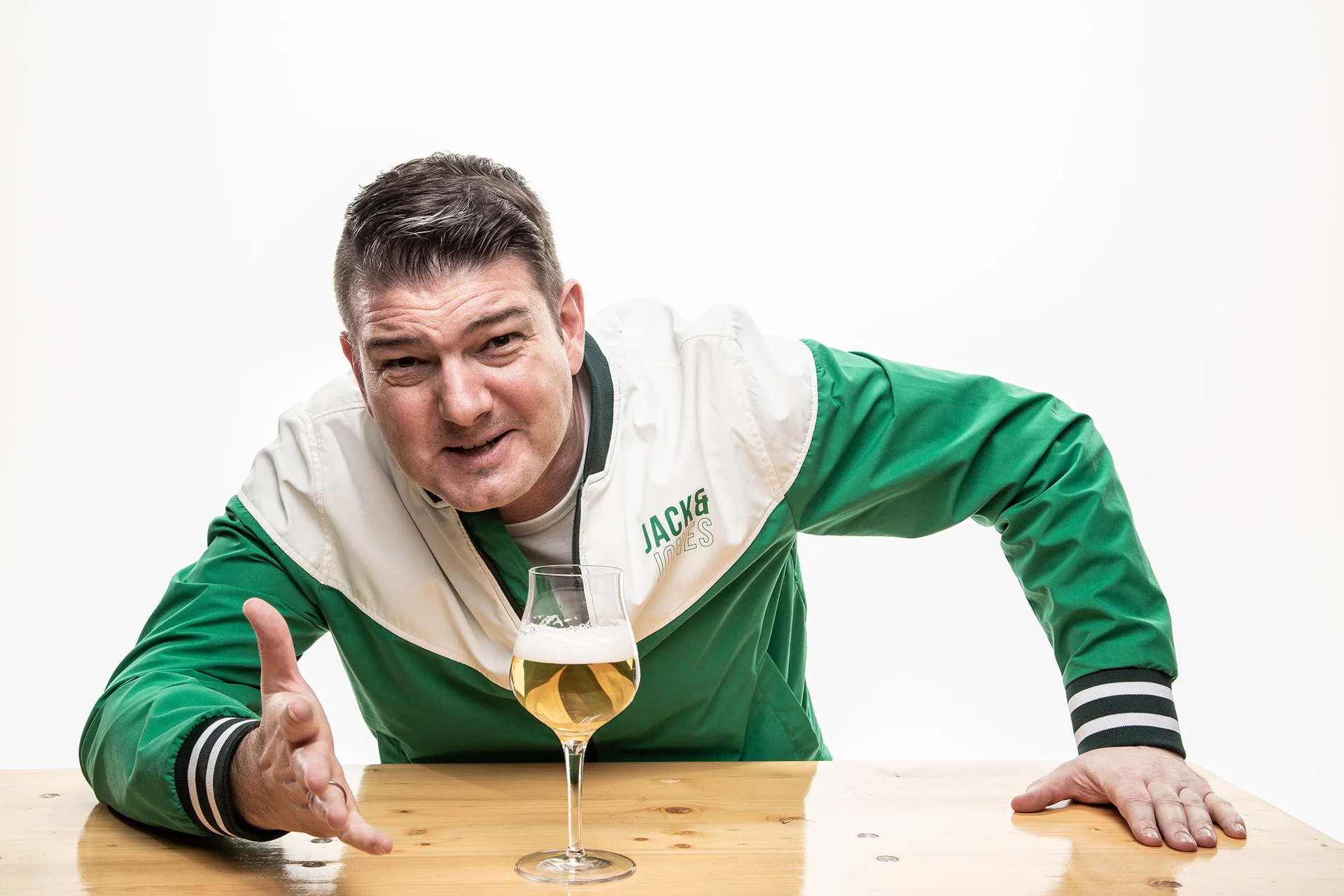
Something similar happened a few years later in Bavaria: Franz Liebl, alias Monaco Fränzn, moved from small town Regen in Lower Bavaria to the Bavarian capital Munich to study. As a dialect speaker, he initially tried to rap in accent-free High German. However, a radio station rejected a track from his project Erster Klasse—with the reasoning that you could hear the dialect. Frustrated, Monaco Fränzn then recorded his first dialect rap, In meim Jargon, with his new crew Doppel D. The response was minimal.
In the late 2000s, a dialect pop wave slowly developed, which also caught the media’s attention. The mixture of regional identity and progressive attitudes was new and different at the time. Hip-hop in dialect represented just one aspect of this regionalism hype: In 2007, singer-songwriter Claudia Koreck landed a radio hit with her feel-good song Fliang. The brass music pop band LaBrassBanda brought rousing live shows, kept audiences at boiling point for hours, and earned themselves a loyal fan base. After two independent albums from 2008 and 2009, the third album Europa was released on a major label in 2013. It reached number 3 on the German album charts.
Many Musicians Try Their Hand at the New Genre of Bavarian Rap
The regionalism hype lasted until about 2016. During this time, a small Bavarian rap scene grew from the nucleus of Doppel D. It included BBou, Liquid, Maniac, and Dicht & Ergreifend. Before their breakthrough, they were all connected to this crew in one way or another and invited each other for features. This culminated in the track Bavarian Squad from 2016, which united almost all the scene’s major figures. As Maniac put it:
Jetz kummt de Gang mit dem Mundart-Slang / Mir san sowas wie da boarische Wu-Tang Clan.
[Now comes the gang with the dialect slang / We’re something like the Bavarian Wu-Tang Clan.]
Let’s look at who was involved.
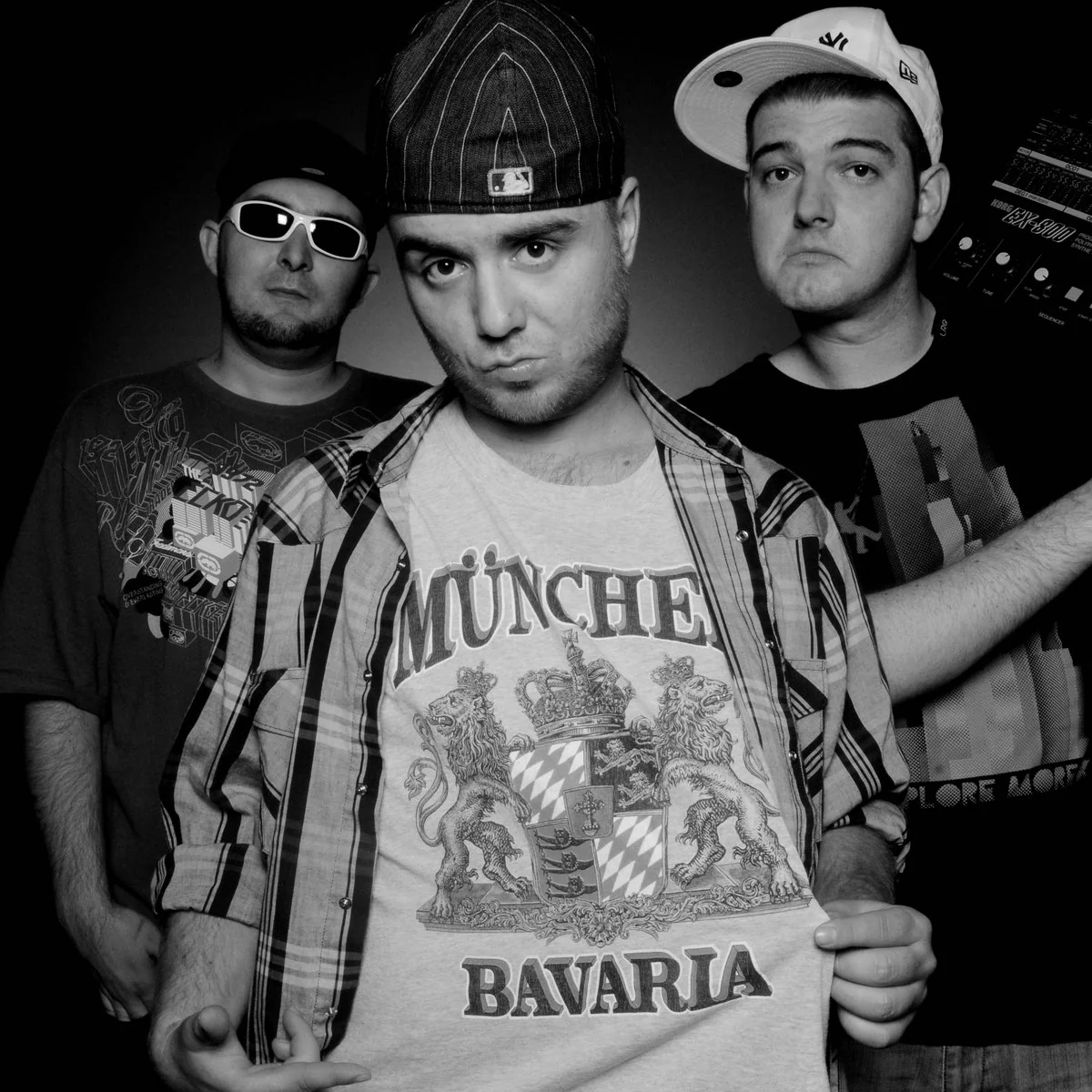
Doppel D
Doppel D consists of the self-proclaimed “Bavarian Rap Papa” Monaco Fränzn, MC Grämsn from Hengersberg, and DJ Spliff. The crew delivered the first Bavaria-Rap milestone in 2007 with their Paid Zaid Mixtape. It sparkled with ideas, both linguistically and musically: They rapped in High German and Bavarian, interspersed with English loanwords. As Grämsn rapped in Mia samma (unplugged):
Rap is coming home ins Lande der Gstanzl / mei Opa war der gleiche, grad in am andern Gwandl
[Rap is coming home to the land of the Gstanzl / My grandpa was the same, just in different clothes, y’all]
The beats ranged from internationally inspired samples and synthesizers to traditional folk music. Raw and unpolished, the mixtape anticipated much of what would later happen in the scene. With Watschnbaam from their second album B-AYA-N, the crew landed a small hit in Munich’s underground and clearly positioned themselves against conservatism with CSU-Rapper. In 2012, the nostalgic 99 EP followed, then the crew took an indefinite break. Monaco Fränzn started a solo career as Monaco F, brilliantly sampled a Fredl Fesl yodel in Bierallergie from the 1 EP (2014), and continues to release new material regularly—most recently the single cringe Päbbn (Babba) in July 2025. Grämsn also released several solo albums, but unfortunately they received less attention. DJ Spliff joined the meteoric Dicht & Ergreifend in 2014. Doppel D still occasionally perform in their original lineup.
BBou
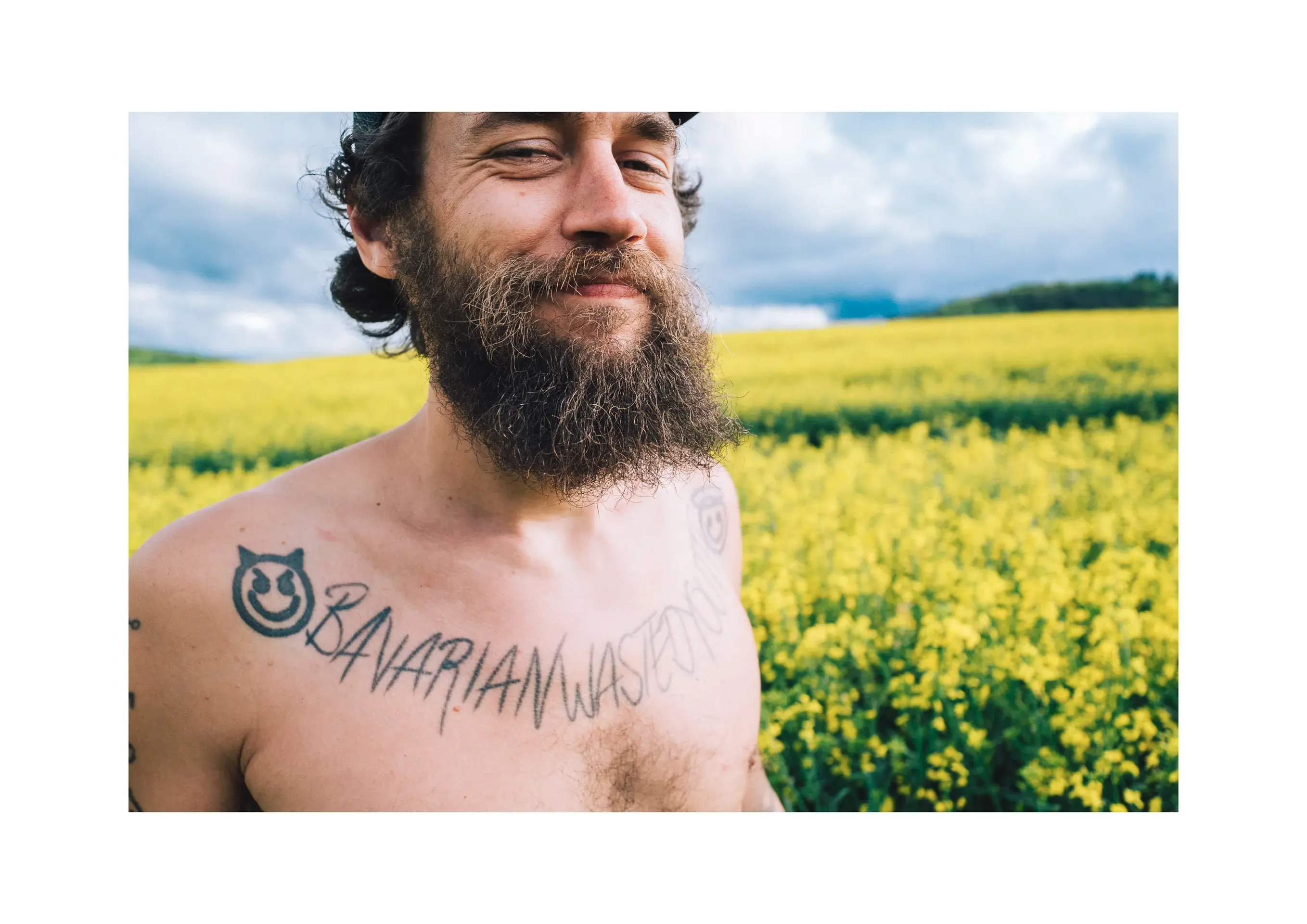
After Doppel D’s withdrawal, other rappers from their circle took over: BBou from Amberg was already featured on Doppel D’s I war am Voixfest in 2007—back then still in High German. In 2011, he released his first studio album Guad & Fesch with dialect rap. The lyrics surpass everything previously done in dialect in terms of crudeness and obscenity. His showpiece Bazis wissen wer da BBou is dates from 2013—a remix of Haftbefehl’s Chabos wissen wer der Babo ist. Instead of glorifying crime, BBou indulges in braggadocio that doesn’t take itself seriously. This brought 1.6 million views on YouTube - sensational for Bavaria-Rap. Over time, however, his reputation apparently became too lowbrow even for him. Since the album Idylle, he’s presented himself as a hippie and partially strives for more depth in his lyrics.
Liquid
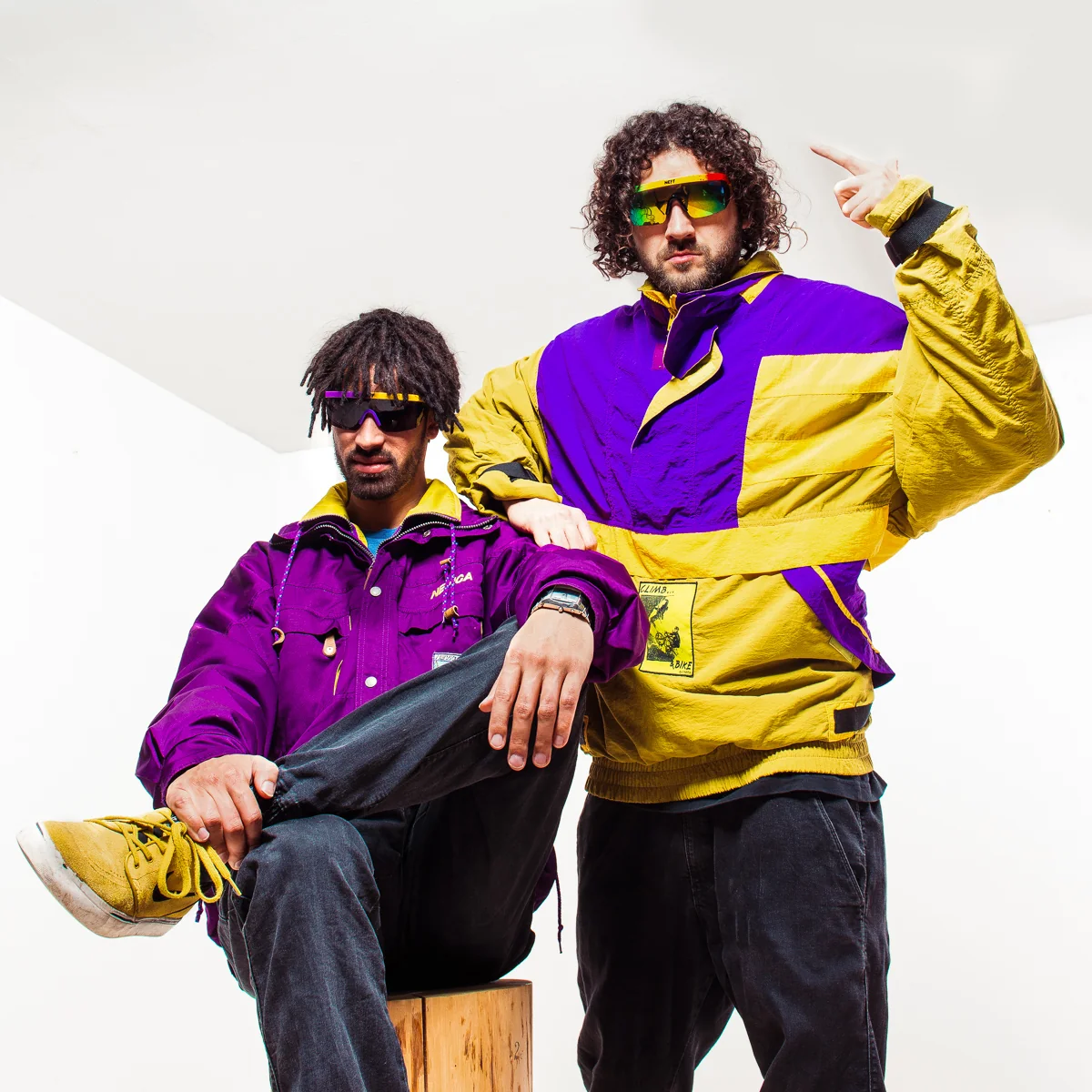
The next one in the group, Liquid from Regenstauf, was once again persuaded by BBou to give dialect rap a try. In 2012, the two had their first hit with Mach doch dein Polt-Remix, peppered with sampled cursing from Bavarian comedian Gerhard Polt. Two months later, Liquid set new standards again with Bavarian Barbarian, featuring doubletime parts that are almost faster than sound. This technical rap over boombap beats, inspired by 1990s aesthetics, was initially his trademark. He impetuously pushed well beyond the boundaries of political correctness—even though, as a dark-skinned Bavarian, he was likely a victim of discrimination himself. However, this changed on his later albums. His track Depp Du from the album The Gaudi is Real (2019) is brilliant in that regard: Together with Maniac, he clearly positioned himself against right-wing extremism and stood in solidarity with refugees. At the same time, he sampled Du Depp by Haindling—yes, exactly, that Haindling who had already rapped in dialect back in the 1980s.
Maniac
Like Liquid, Maniac has a US-American migration story. At the age of seven, he moved with his family from Regensburg to South Carolina. There, as a teenager, he learned to rap and released his first album Demograffics in 2004—in English, of course. In 2016, he then made his first attempts at dialect rap. With BBou, he released the relaxed stoner track Aromatherapie and excelled on Bavarian Squad, to which he contributed the final part and climax. He became Liquid’s new sparring partner and released three albums with him. In 2017, he was also the mastermind behind the Refugee Rap Squad. He records the track Chill kein Asyl with four rapping refugees and has them pose in traditional bavarian costume against a mountain backdrop in the video.
Bavarian Rap Conquers the Album Charts
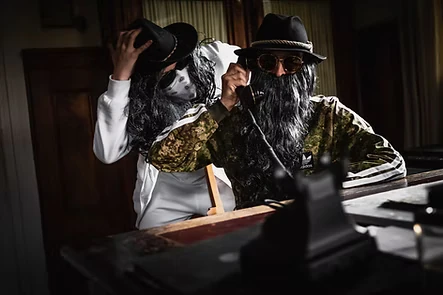
And that brings us to today’s most successful crew in the Bavarian rap scene: Dicht & Ergreifend. The two exiled Lower Bavarians Urkwell and Lef Dutti recorded a dialect rap track for fun in their new home of Berlin. On January 5, 2014, they released the video for Zipfeschwinga on YouTube. The scene rubed the New Year’s hangover from its eyes and was amazed. Over a Balkan brass beat reminiscent of Shantel, Dicht & Ergreifend party-readily demolished Bavarian conservatism. Monaco F shared the track on his Facebook timeline and from then on it was steeply upward: tour opener for LaBrassBanda, an overfunded crowdfunding campaign for the first album Dampf der Giganten, eight million views on YouTube for the single Wanderdoog.
How to explain this? Dicht & Ergreifend are compatible in many directions: Rough without being politically incorrect; funny, danceable and party-ready, but also profound, socially critical and political. Their criticism of the rural milieu in Bavaria draws from personal experiences and is closely observed. At the same time, you can sense the broadening of horizons from their move to Berlin. They expose the absurdities of supposedly normal country life. The beats are mostly modern construction. When folk music elements are used, as in Meier & Wimmer, they’re so magnificent that it seems as if beats and zither have always belonged together. None of this is new, but more refined than ever before. Consequently, Dicht & Ergreifend are today’s most successful Bavarian rap crew: With their third album Es werde Dicht from 2023, they reached number 15 on the German album charts—a first for the scene.
Besides releases from established acts, the 2020s also saw some newcomers like Fichtenkartell from the Regen district, Ria Reiser, who finally gave dialect rap a female voice, or Sääftig, who clowned around in Dirndl Weed over trap beats in an Upper Bavarian-Franconian mishmash. In early 2025, Oimara landed a German number 1 hit in dialect. Of course, his singing on Wackelkontakt also sounds a bit like rap. But that’s probably more because rap has become an integral part of pop music. It only has limited connection to hip-hop.

Overall, the Bavarian rap terrain seems divided up, with the scene routinely delivering high quality. Like Roider Jackl with Gstanzl, today Dicht & Ergreifend use rap to humorously critique current conditions. The need for mocking competition and political protest seems unbroken in any case. It will be exciting to see what artistic expression it finds in the future. In any case, it doesn’t look like world political conditions will become so idyllic anytime soon that criticism would be unnecessary.
Originally published in Zwiefach 05/2025 in german. Translation published with kind permission by Roland Pongratz.
Download the english translation of the article here in the original layout. A big thank you to Roland Pongratz and Andrea Iven for making this possible.